

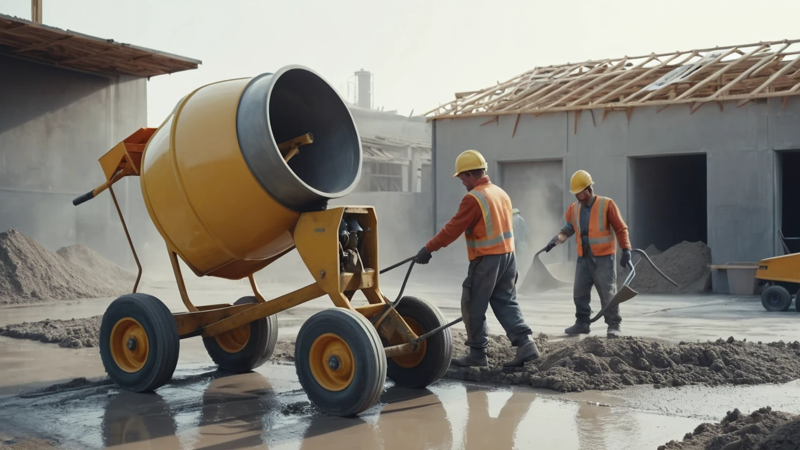
How to choose the right concrete mixer quickly with simple tips, types, sizes, and buying advice for DIYers and professionals.
Choosing the right concrete mixer depends on your project size, frequency of use, and budget. Small DIY jobs need portable mixers, while large construction requires heavy-duty models. Focus on capacity, power source, and durability to make the best choice.
How To Choose The Right Concrete Mixer
Ever stood in front of different concrete mixers and thought, “Which one do I actually need?” 🤔
You’re not alone. Picking the wrong mixer can waste time, money, and effort. But here’s the good news — once you understand a few basics, choosing becomes super simple.
Let’s break it down step by step so you can make a confident choice.
What Is A Concrete Mixer And Why It Matters 🏗️
A concrete mixer is a machine that blends cement, sand, gravel, and water into concrete. It saves time and ensures a consistent mix. Without it, mixing by hand becomes tiring and uneven.
Using the right mixer improves efficiency and reduces labor. It also ensures better quality construction. Whether you’re building a patio or a house, this tool matters.
Think of it like a kitchen blender. A small one works for smoothies, but not for a big party. The same idea applies here.
Understand Your Project Size First 📏
Before buying anything, ask yourself one simple question: How big is my project?
For small home projects like repairs or garden paths, a compact mixer works fine. But for large construction, you’ll need something powerful.
Here’s a quick guide:
| Project Type | Recommended Mixer |
| Small DIY Jobs | Portable Mixer |
| Medium Projects | Drum Mixer |
| Large Construction | Industrial Mixer |
Choosing based on size prevents overspending or underperformance.
Types Of Concrete Mixers Explained 🔄
There are several types of concrete mixers available. Each serves a different purpose.
The most common types include:
- Drum Mixers – rotate to mix concrete
- Pan Mixers – mix inside a stationary pan
- Continuous Mixers – produce concrete non-stop
Drum mixers are best for most users. Pan mixers are used for precise mixing. Continuous mixers suit large-scale projects.
Portable Vs Stationary Mixers ⚖️
Portable mixers are lightweight and easy to move. They are perfect for home use.
Stationary mixers are fixed and powerful. These are used on construction sites.
If you’re a DIY user, go portable. If you’re a contractor, stationary might be better.
👉 Always match mobility with your work environment.
Choosing The Right Mixer Capacity 🪣
Capacity refers to how much concrete the mixer can handle at once.
Small mixers hold around 40–60 liters. Larger ones can handle over 300 liters.
Here’s a simple breakdown:
| Capacity | Best For |
| 40–60 Liters | Small Repairs |
| 100–200 Liters | Home Projects |
| 250+ Liters | Large Jobs |
Choosing the wrong size can slow you down or waste resources.
Electric Vs Gas Powered Mixers ⚡⛽
Electric mixers are quiet and eco-friendly. They are perfect for indoor or residential use.
Gas-powered mixers are stronger. They work well in remote areas without electricity.
If you need portability and power, go gas. If you want convenience, go electric.
👉 Pick based on your work location.
Drum Material And Build Quality 🛠️
The drum is the heart of the mixer. Its material affects durability.
Steel drums are strong and long-lasting. Plastic drums are lighter but less durable.
A well-built mixer lasts years without issues. Cheap materials can break quickly.
Always check the build quality before buying.
Mixing Speed And Efficiency 🚀
Mixing speed determines how fast your work gets done.
A faster mixer saves time but may consume more power. Slower ones are energy-efficient but take longer.
Look for a balance between speed and efficiency.
👉 Time is money, especially in construction.
Ease Of Use And Maintenance 🧰
A good mixer should be easy to operate. Complicated machines waste time.
Look for features like:
- Simple controls
- Easy drum tilt
- Quick cleaning
Maintenance is also important. A mixer that is easy to clean will last longer.
Budget And Cost Considerations 💰
Concrete mixers come in different price ranges.
Cheap mixers may save money upfront but cost more in repairs. Expensive ones offer durability and performance.
Here’s a rough idea:
| Budget Range | Mixer Type |
| Low Budget | Small Portable |
| Mid Range | Drum Mixer |
| High Budget | Industrial Mixer |
👉 Think long-term, not just short-term.
Frequency Of Use Matters 🔁
How often will you use the mixer?
If it’s a one-time project, renting might be better. Buying makes sense for frequent use.
Heavy-duty mixers are built for daily use. Light models are for occasional tasks.
Choose based on how often you’ll use it.
Safety Features To Look For ⚠️
Safety should never be ignored.
Look for features like:
- Protective covers
- Stable base
- Emergency stop options
A safe machine protects you and your workers.
👉 Safety first, always.
Noise Levels And Working Environment 🔊
Some mixers are noisy, especially gas-powered ones.
If you’re working in residential areas, choose a quieter model. Electric mixers are usually less noisy.
Noise can affect comfort and productivity. So choose wisely.
Portability And Storage Needs 🚚
If you move frequently, portability matters.
Look for mixers with wheels and compact designs. Easy storage is also important if you have limited space.
A bulky machine can become a hassle over time.
Brand Reputation And Warranty 🏆
Not all mixers are created equal.
Choose trusted brands with good reviews. A warranty gives peace of mind.
Reliable brands offer better support and durability.
👉 Always check before buying.
Common Mistakes To Avoid ❌
Many people make simple mistakes when choosing a mixer.
Avoid these:
- Buying too small or too large
- Ignoring power source
- Choosing cheap quality
These mistakes can cost time and money.
Quick Checklist Before Buying ✔️
Before you finalize your purchase, run through this checklist:
- Project size defined
- Right capacity selected
- Power source chosen
- Budget planned
- Safety features checked
If everything matches, you’re ready to go!
Conclusion 🎯
Choosing the right concrete mixer doesn’t have to be confusing. Once you understand your needs, everything becomes clear.
Focus on project size, capacity, power source, and durability. Don’t rush your decision. A good mixer saves time, effort, and money.
👉 Pick smart today, and your future projects will thank you.
FAQs ❓
What size concrete mixer do I need for home use?
A small mixer between 100–150 liters is ideal. It handles most home projects easily. It’s also easy to store and operate.
Is electric or gas mixer better for beginners?
Electric mixers are better for beginners. They are quieter and easier to use. They also require less maintenance.
Can I use a small mixer for large projects?
It’s not recommended. Small mixers take longer and may wear out quickly. Large projects need high-capacity machines.
How long does a concrete mixer last?
A good mixer can last 5–10 years. Proper maintenance increases its lifespan. Quality materials also matter.
Should I rent or buy a concrete mixer?
Rent if you need it once. Buy if you use it regularly. Ownership saves money over time.


Leave a Reply